Cuevas de San José in Photos: A Look Inside the Caves
The boat glides into total stillness, broken only by the wooden pole of the boatman nudging the stone wall. Underground rivers have a strange acoustic quality where every drip sounds amplified, and looking for cuevas de san jose fotos before your trip rarely prepares you for the way light behaves against damp limestone. The subterranean lighting cuts through clear turquoise water, throwing shifting patterns onto the vaulted ceilings above. It looks surreal, almost staged, yet this cave system in Castellón has been carved by water over hundreds of thousands of years.
Most travelers stumble across pictures of this place on Instagram or travel blogs and immediately wonder if the real thing looks anything like the filtered snapshots. Having spent hours navigating both the wet and dry sections of the cavern, I can tell you that the reality is actually moodier and far more textured than most cameras can capture. This visual walkthrough takes you deep inside the cave network, detailing what you will actually see through your lens, how the chambers are lit, and how to handle the tricky lighting conditions underground.
Book your san jose caves valencia experience:
Inside the Cavern: What the Visual Journey Really Looks Like
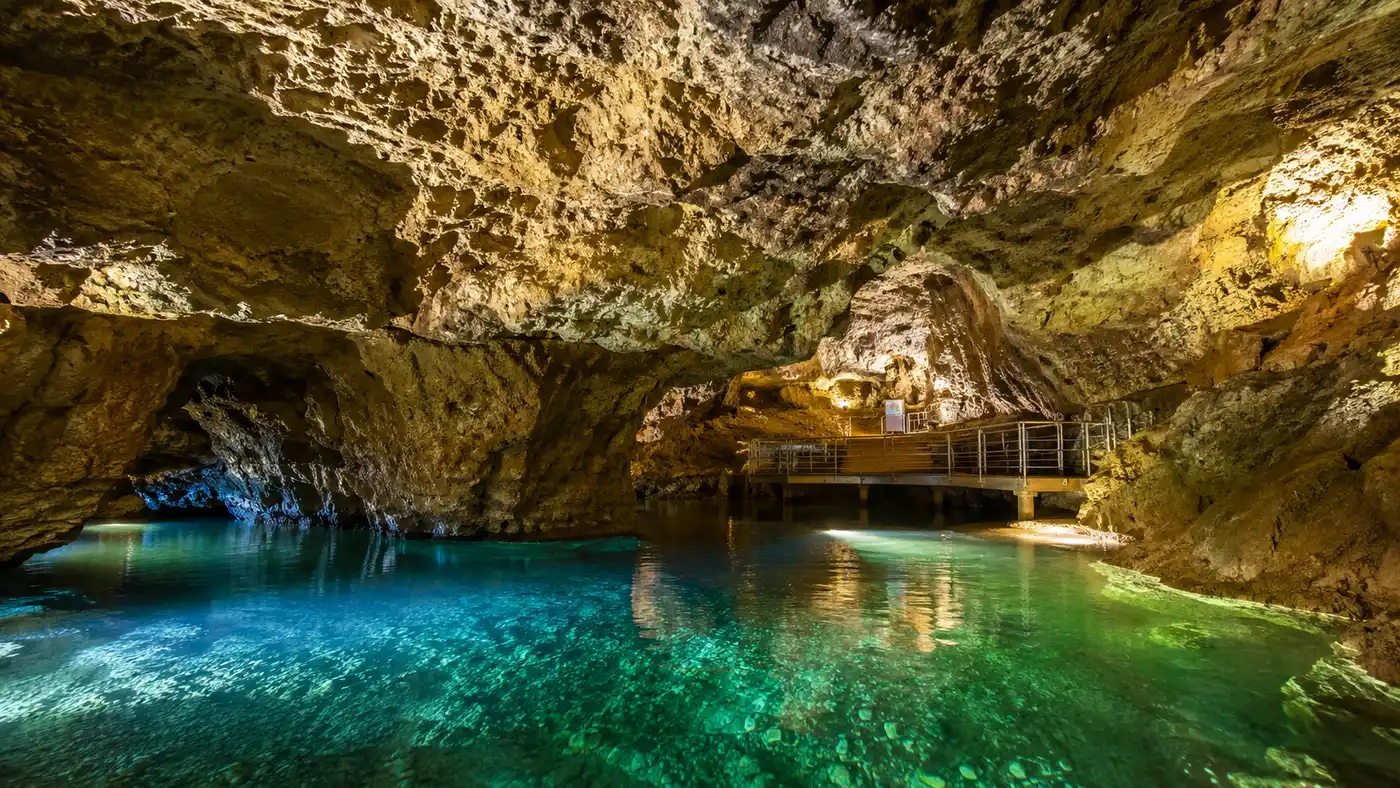
Stepping out of the bright Mediterranean sun into the mouth of the cavern shocks your eyes. The temperature drops instantly to a steady 20 degrees Celsius, which feels chilly in July and surprisingly warm in December. The embarkation dock is your first real visual milestone. Wooden boats line the turquoise channel, illuminated from beneath by submerged lamps that reveal the gravel riverbed resting just two meters below. Looking down, the clarity of the water makes the boats look like they are floating on thin air.
Once your boat pushes off, the ceiling immediately dips low. You duck your head under jagged limestone ribs before the tunnel suddenly blooms into the Bat Chamber, or Sala de los Murciélagos. Do not worry, the bats moved further back into unexplored galleries decades ago when regular electric lighting was installed. The ceiling here reaches high into deep shadow, punctuated by clusters of small soda-straw stalactites hanging like frozen rain. When looking through online galleries of coves de sant josep fotos, this wide cavern is often the first major chamber pictured.
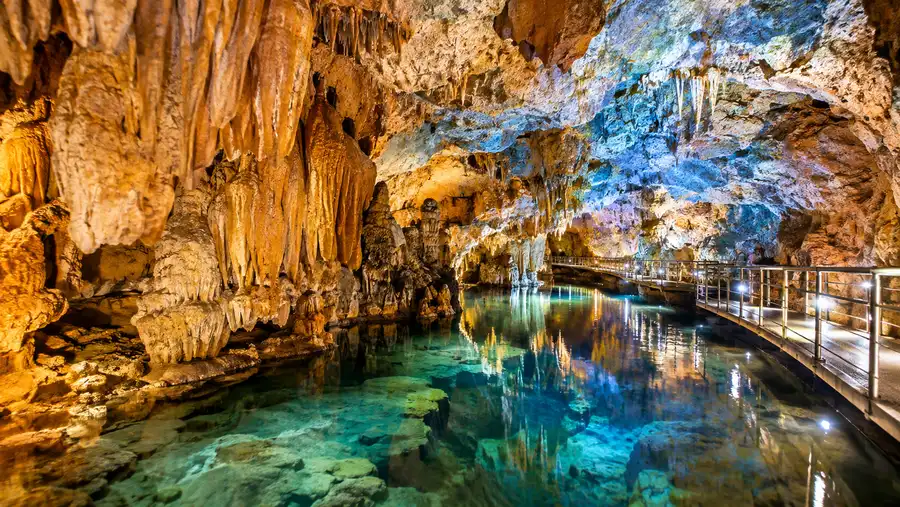
The lighting scheme inside the caves relies on strategically hidden warm and cool fixtures tucked into natural crevices. As you drift silently along the 800-meter navigable river section, you pass through narrow squeezes where the stone is slick with mineral moisture. Golden light washes across flowstones, highlighting shades of ochre, burnt red from iron deposits, and chalky white where calcium carbonate is actively forming today. Gliding along on the underground river boat tour feels like drifting through an art gallery sculpted entirely by dripping water.
The boat path weaves past formations known colloquially as the Devil's Mouth and the Lake of Diana. Diana's Lake is easily the most photogenic stretch of the aquatic route. The water here is mirror-still, reflecting the illuminated limestone vault above with such precision that you can hardly tell where the rock ends and the river begins. You want to have your camera resting on your knee, prepped for sudden shifts in lighting as the boat glides smoothly forward.
Photography Rules, Equipment, and What to Expect Underground
Photographing inside a living cave system presents distinct challenges that catch casual smartphone photographers completely off guard. Tripods and selfie sticks are strictly forbidden inside the caves for safety and space reasons, meaning every shot you take must be handheld from a gently moving boat. If you drop a lens cap or phone into the water, it rests on the river bottom forever, as reaching into the water is prohibited to protect the delicate subterranean ecosystem.
Note: Flash photography is strictly forbidden throughout the entire cave system because bright artificial bursts promote the growth of green algae on delicate rock formations, known among geologists as lampenflora.
Because flash is off limits, you depend entirely on ambient lighting. Modern smartphones handle this reasonably well through automated computational night modes, but there is a catch. Night modes require holding the camera motionless for two to four seconds. On a floating boat carrying up to fourteen passengers, minute shifts in balance create motion blur in longer exposures. You need to time your shots during moments when the guide slows down to turn or steadies the vessel with their wooden pole against the rock face.
If you carry a dedicated mirrorless or DSLR camera, a fast prime lens is your best friend. A 24mm or 35mm lens with an aperture of f/1.8 or f/2 allows you to keep your shutter speed around 1/50th of a second while maintaining an ISO between 1600 and 3200. Zoom lenses with variable apertures like f/3.5-5.6 will struggle badly in the darker sections between illuminated features, forcing your camera into grain-heavy ISO ranges that turn shadows into muddy digital noise.
At the exit dock, official staff members often snap a commemorative photo of each boat group before you disembark for the walking portion. Regarding the precio cuevas de san josé fotos, these printed souvenir prints usually sell for around 8 to 10 euros at the gift kiosk outside. Many visitors buy them simply because getting a clean, wide-angle family portrait from inside a moving boat without blocking other passengers is nearly impossible on your own.
Pro tip: Switch your phone camera to burst mode or continuous shooting when passing through Diana's Lake, allowing you to pick the one crisp frame where the boat was completely motionless.
Lighting Conditions Across Cave Zones
The cave is not lit uniformly from start to finish. Different sections feature wildly diverse lighting setups, water depths, and ceiling heights that completely alter how scenes appear on camera. Understanding these zones helps you prepare your settings instead of frantically adjusting sliders in the dark.
| Cave Zone | Primary Feature | Lighting Level | Photo Difficulty |
|---|---|---|---|
| Embarcadero (Dock) | Moored wooden boats | Bright ambient LED | Easy |
| Bat Chamber | Massive vaulted ceiling | Low, directional | Moderate |
| Diana's Lake | Glassy water reflections | Warm accent uplights | Moderate |
| The Syphon Tunnel | Extremely low clearance | Soft path lighting | Hard (constant motion) |
| Galería Seca (Dry Walk) | Stalactites and draperies | Focused spotlighting | Easy (stable footing) |
The table above illustrates why many visitors end up with blurry pictures from the first half of the tour and sharp pictures from the second. The transition from water to land changes everything about how you frame your shots.
Book your san jose caves valencia experience:
The Dry Walking Gallery: Capturing Stalactites Up Close
After navigating roughly 800 meters of the subterranean river, your guide pulls the boat alongside a stone landing. This marks the beginning of the dry gallery, a walking path roughly 250 meters long that lets you explore the cavern on foot. For anyone hunting for detailed fotos de las cuevas de vall d uixó, this walking segment is where you will capture your cleanest images.
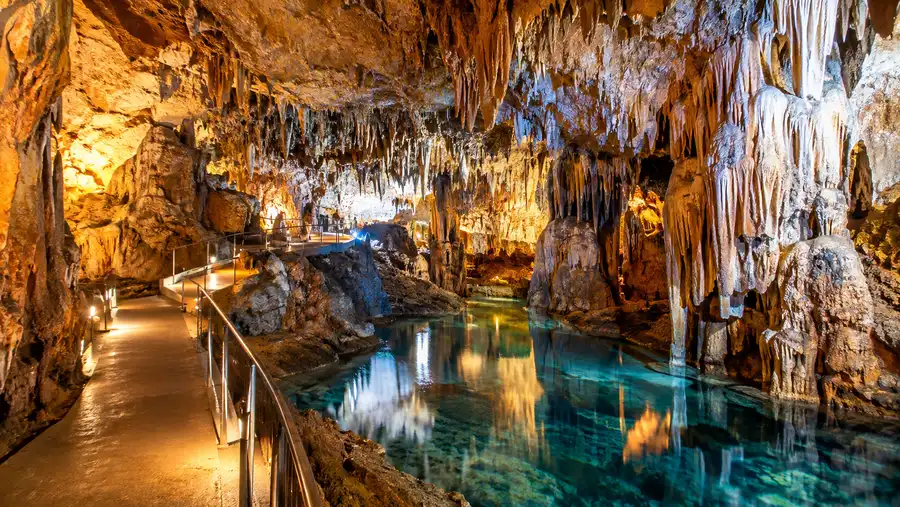
Walking on solid ground eliminates the sway of the boat entirely. Here, you can brace your elbows against your ribs, lean gently against handrails, and capture sharp, high-resolution closeups of delicate rock structures. The formations along this corridor are remarkable. You walk beneath huge stone draperies, massive columns where stalactites and stalagmites fused together over millennia, and eccentric helictites that twist sideways in defiance of gravity.
The texture in this gallery is incredible. Some surfaces glisten wetly under yellow spotlights, while dried out sections further from the water table look matte, chalky, and ancient. You also get a close look at the natural erosion rings on the walls, showing historical flood water levels from centuries before modern engineering regulated the river flow.
Finding great angles in the dry gallery requires paying attention to small architectural details carved by nature. Keep an eye out for these specific visual elements as you walk:
- Flowstone cascades: Sheets of calcite that resemble frozen waterfalls running down sheer rock faces.
- Cave draperies: Thin, translucent sheets of mineral deposits that glow amber when backlit by path lights.
- Erosion pockets: Circular hollows scooped out of the stone by swirling pebbles during ancient flash floods.
- Column junctions: The exact seam where an overhead stalactite meets a rising floor formation.
Before planning your photography gear, check the latest ticket prices and booking rules because visiting during standard public hours requires adhering strictly to group pacing guidelines. Guides keep groups moving along the walkway so tours do not bottleneck, meaning you have roughly 15 to 20 seconds at any single viewpoint before needing to keep pace with the crowd.
Framing Underground River Reflections
Water is the primary subject in almost every memorable shot taken inside this cave system. Without the river, the cave would be just another limestone cavern, but the presence of still water creates optical illusions that look astonishing when framed correctly. When browsing through regional travel albums full of fotos de grutas de san josé, the images that stand out are universally the ones where water plays a starring role.
To capture convincing reflections, keep your camera lens as close to the water surface as safely possible without risking your gear. Shooting from eye level while seated on a boat bench gives a flat, predictable perspective. Lowering your phone down near the boat gunwale tilts the angle of reflection, expanding the mirrored ceiling across the bottom third of your photograph. This creates dramatic symmetry, making the chamber appear twice as cavernous as it actually is.
Colors underwater shift dramatically depending on the depth and lamp placement. In shallow passages, the riverbed shines with pale mint and aquamarine tones. In deeper hollows, where the water plunges down several meters into unmapped fissures, the water turns an intense indigo. These tonal transitions happen quickly, so keeping your eyes scanning ahead of the boat helps you anticipate compositions before the vessel drifts past them.
Here are several practical habits that will dramatically improve your subterranean snapshots:
- Wipe your camera lens: Cave humidity easily fogs cool glass surfaces the moment you step inside from the warm outdoor air.
- Turn off autofocus assist beams: The little orange or green light emitted by your camera ruins shots for people sitting nearby and illuminates airborne dust motes.
- Underexpose intentionally: Dial down your exposure compensation by half a stop to prevent bright spotlights from blowing out to harsh white highlights on pale limestone.
- Focus on high-contrast edges: Cameras hunt for focus in dim rooms; lock your focus on the sharp edge where an illuminated rock meets a dark shadow.
- Keep boat gunwales in frame: Including a small slice of the wooden boat edge adds scale, depth, and context to an otherwise abstract stone cavern.
Remember that the boatman propels the boat using a pole pushing against the ceiling and walls. Every time the pole pushes, the water surface ripples, destroying the mirror effect for several seconds. Watch the rhythm of the boatman. Right after a push, the boat glides smoothly, and within five seconds the trailing ripples settle behind you, giving you a brief two-second window of pristine reflection before the next push begins.
Frequently Asked Questions about cuevas de san jose fotos
Can you take photos inside Cuevas de San José?
Yes, non-commercial photography without flash is permitted during the tour. You can freely use smartphones and handheld cameras, but tripods, monopods, and selfie sticks are strictly prohibited inside the boats and along the footpaths.
Why are my cave photos turning out blurry?
Blurry photos happen because the boats are constantly drifting while your camera lowers its shutter speed to absorb faint light. You need to use wide apertures, boost your ISO, and shoot while resting your hands firmly against your lap to stabilize the shot.
Is there enough light inside to shoot with a smartphone?
Yes, modern smartphones with computational night modes perform well in the main illuminated chambers like Diana's Lake. However, you must brace your hands steadily to prevent motion blur during multi-second low-light captures.
Can I bring a camera backpack on the boat?
Small backpacks and shoulder bags are allowed, but large camera bags or bulky pelican cases are not practical and may be restricted by staff due to limited legroom on the wooden vessels.
Quick Reference
- Flash photography is strictly banned
- Water temperature stays near 20°C year-round
- River section spans 800 navigable meters
- Walking segment adds 250 meters on foot
- Average visit lasts about 45 minutes
Book your san jose caves valencia experience:
Before You Pack Your Camera
Taking great photos inside this underground river is really about managing expectations and being prepared for tricky lighting. You will not get crisp studio quality images from a moving wooden bench, and honestly, trying too hard to capture perfection often pulls you out of what is a genuinely peaceful natural experience. Take your shots during the slow glides across Diana's Lake and along the walking gallery, but make sure to set the phone down for a few minutes just to watch the ripples bounce off illuminated limestone vaults that took millions of years to form.
Read more about san jose caves valencia.